Ways to apply herbicide to crops when timing matters.
If you are comparing ground rig spraying, crop dusting, and drone herbicide application, the best answer is field-specific. North Alabama Drone Applicators helps growers decide where aerial drone spraying fits the crop, the label, the weather window, and the economics.
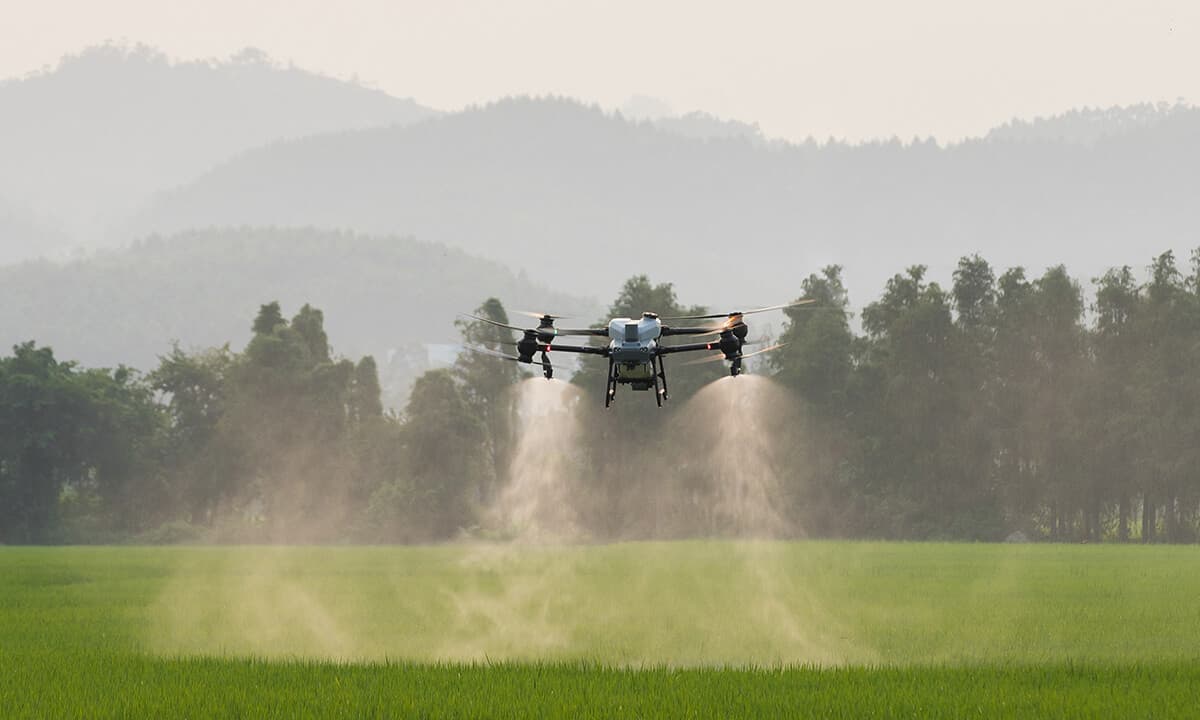
Match the herbicide application method to the field problem.
No single application method wins every acre. A good plan starts with crop safety, label compliance, weather, weed pressure, and whether the equipment can reach the target without creating another problem.
Ground rig spraying
Best fit
Large, dry fields where equipment can travel without leaving ruts.
Watch-outs
Wet soil, narrow gates, end rows, terraces, and irregular patches can delay the pass or add compaction.
Crop dusting / airplane application
Best fit
Broad acres that need fast coverage and have enough scale for a traditional aerial route.
Watch-outs
Small fields, tree lines, power lines, and patch work can make it harder to place product only where needed.
Drone herbicide application
Best fit
Wet spots, field edges, pasture strips, irregular blocks, and timing-critical acres where a rig or plane is not the best fit.
Watch-outs
Every herbicide still has to match the label, crop stage, weather, buffer requirements, and field conditions.
What decides whether drone herbicide spraying makes sense?
We review the same practical details a farmer or applicator would weigh before putting any herbicide pass on the schedule. If a ground rig or crop duster is the better tool, we will say so.
- Target weed pressure and crop stage
- Product label requirements and carrier volume
- Wind, temperature inversion risk, humidity, and rainfast interval
- Soil trafficability for ground equipment
- Sensitive crops, waterways, homes, tree lines, and other buffers
- Field shape, acreage, gates, terraces, ditches, and power lines
Herbicide application help for Tennessee Valley crop acres.
We are building county-by-county routing for Madison, Limestone, Morgan, Cullman, and Lawrence Counties. Tell us your crop, weed pressure, herbicide plan, acreage, and timing window so we can evaluate whether drone spraying is a fit alongside your current ground rig or aerial program.
Counties served
- Madison County, Alabama
- Limestone County, Alabama
- Morgan County, Alabama
- Cullman County, Alabama
- Lawrence County, Alabama
Common questions from farmers comparing application options.
What are the main ways to apply herbicide to crops?
Most farmers compare ground rig spraying, traditional aerial crop dusting, and drone herbicide application. The right choice depends on acreage, soil conditions, field shape, product label, weather window, and how precisely the pass needs to be placed.
Can a drone apply herbicide instead of a ground rig?
In many fields, yes, when the herbicide label and conditions support aerial application. Drones are often strongest when the rig would rut wet ground, cannot turn cleanly, or only part of the field needs treatment.
Is crop dusting better than drone spraying for herbicide?
Traditional crop dusting is usually stronger for large, uniform acre blocks that need very fast coverage. Drone spraying is often more practical for smaller fields, patches, field edges, wet holes, and irregular acres where a plane or ground rig is not ideal.
Do you help decide which herbicide application method fits my farm?
Yes. North Alabama Drone Applicators reviews crop, target pass, acreage, product plan, field access, and timing pressure before recommending drone application, ground rig spraying, traditional aerial, or a combination.
Find out if drone herbicide application fits your acres.
Share your crop, county, herbicide pass, and timing pressure. We will follow up with a practical answer on drone spraying, ground rig spraying, crop dusting, or a combined approach.