Cover crop seed needs a real establishment window. In North Alabama, that window can tighten quickly when harvest runs long or early rain makes fields soft.
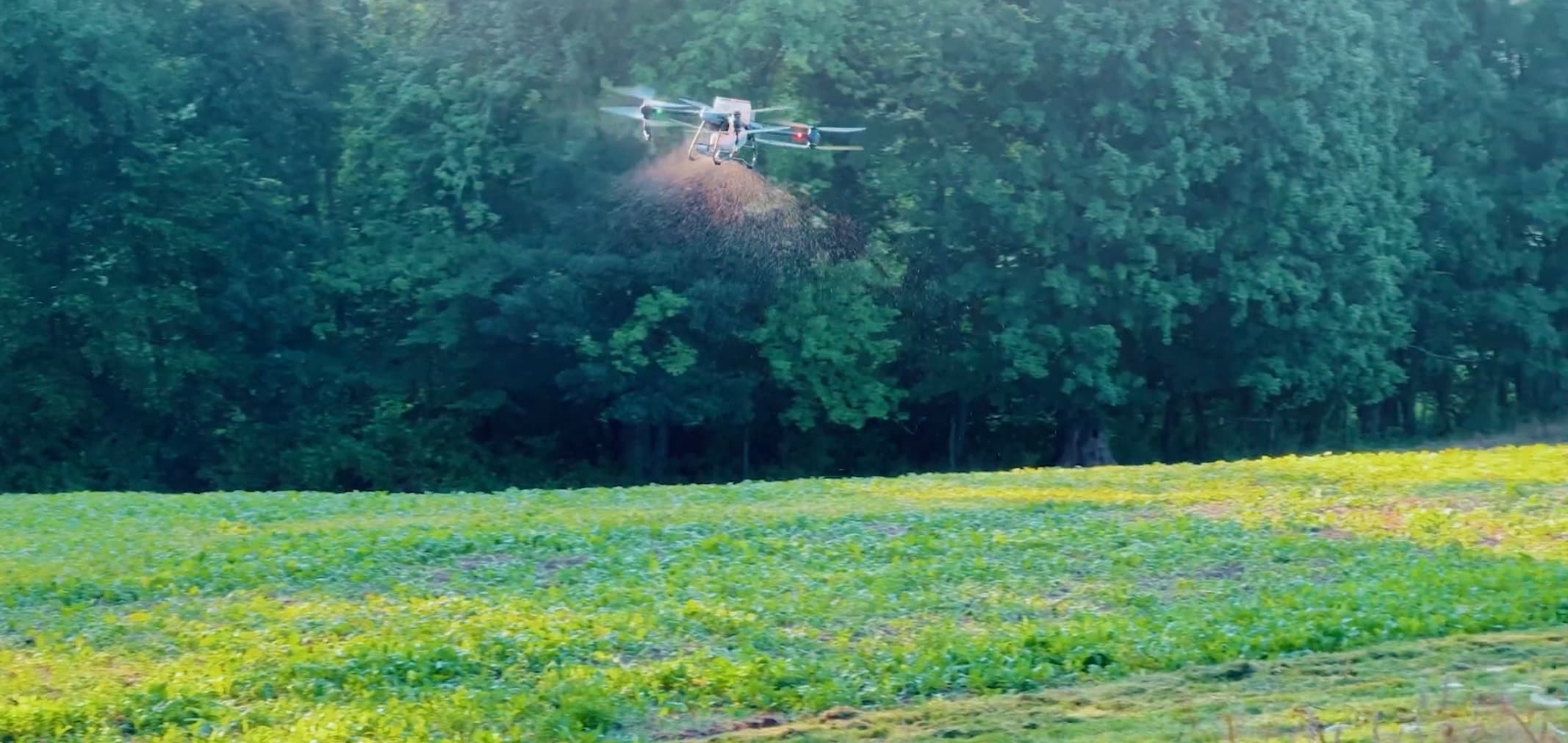
Drone spreading gives growers another way to get seed across acres without waiting for a ground rig to carry the load. It is not the right answer for every seed mix or every field, but it can be useful when access is the problem.
Good drone spreading candidates
Drone spreading is worth reviewing when:
The best fit usually combines a clear agronomic reason with a practical access problem.
What to check before scheduling
Before a drone spreading pass, review seed size, target rate, acres, obstructions, nearby sensitive areas, and the follow-up weather pattern. A pass right before a suitable rain can help seed settle into the canopy and soil surface.
Also consider the condition of the residue or standing crop. Dense canopy can change how seed reaches the ground, while bare or lightly covered soil may allow more direct contact.
How to request a field review
Send the field location, acreage, seed mix, target pounds per acre, and desired timing. We can help determine whether drone spreading belongs in the plan or whether another applicator is a better fit.