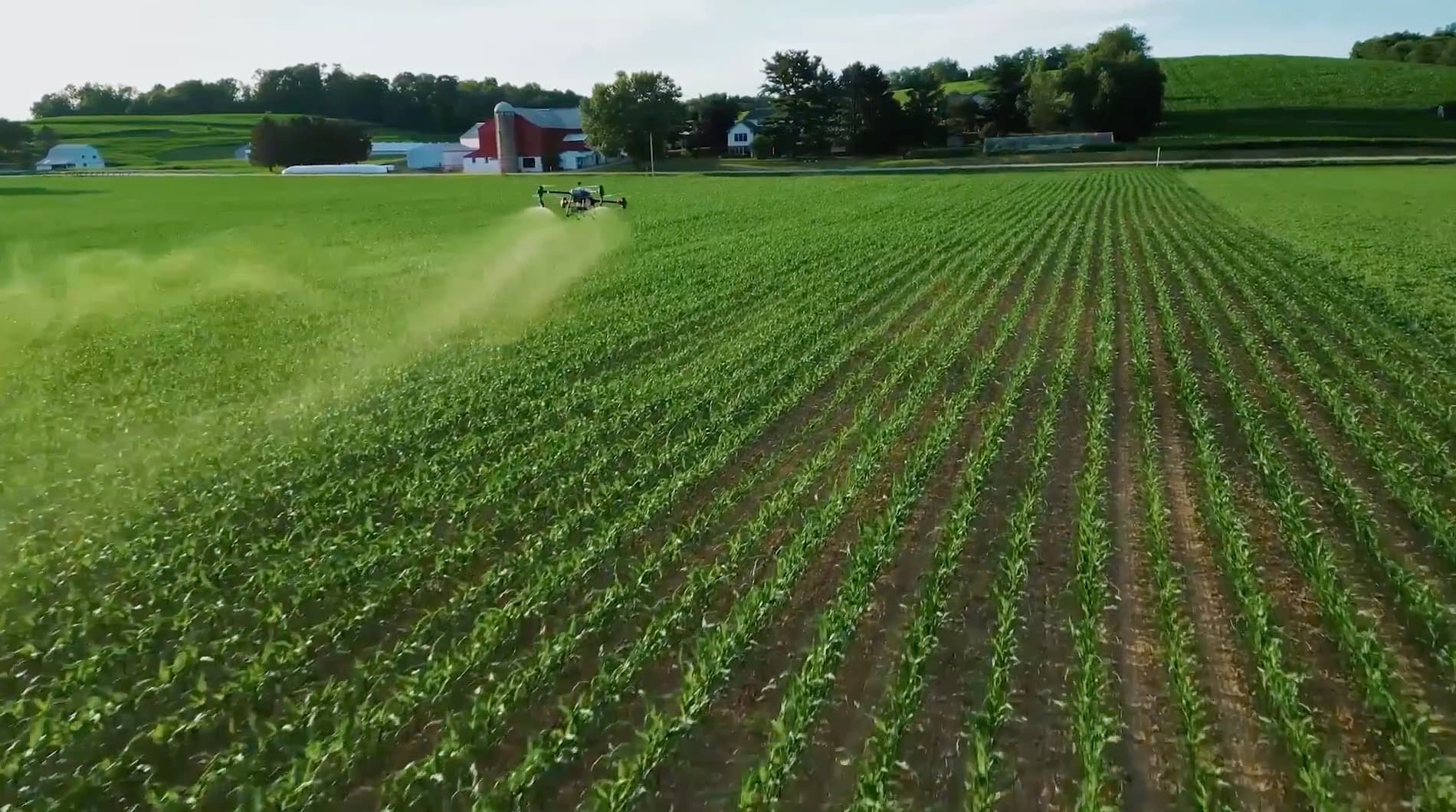
Rain is part of farming in the Tennessee Valley. The challenge is what happens after the shower moves out: soft headlands, wet holes, and crop stages that keep moving even when a ground rig cannot.
Drone spraying can help in some of those windows, but it is not an automatic replacement for a ground rig or airplane. The right answer depends on the product, field layout, crop stage, and weather that follows the rain.
Start with the label and weather
Before any application method makes sense, the product label has to support the plan. Wind, temperature, humidity, buffers, carrier volume, and re-entry timing all matter.
For drone work, we also look closely at:
Why drone access can matter
Ground equipment may be fast once it is in the field, but wet clay can make getting there the problem. A drone can often launch from a firm edge, farm lane, or nearby staging area without putting tires into soft rows.
That can be useful when a grower is trying to protect yield during a short fungicide, herbicide, insecticide, or foliar nutrition window.
When another applicator may still be better
Large open blocks, high-volume applications, and fields with tight label restrictions may point back to a ground rig or traditional aerial applicator. A practical review should say that plainly.
The goal is not to force every acre into a drone plan. The goal is to match the applicator to the field conditions and timing pressure in front of you.
What to share before scheduling
When you ask for a field-fit review, include the crop, county, acreage, product target, field access notes, and timing window. Photos or maps of wet areas, gates, and obstacles can make the recommendation more useful.